
Amanda Cleary Eastep
For months during the pandemic, I had been feeling compelled to write a thank you letter to my fifth grade teacher.
Not because he was my favorite teacher. . .at least not when I was eleven. His dress shoes—as black and shiny as his slicked down hair—squeaked. Like the other parochial school teachers, he wore a suit and tie. I think I saw him smile once. A little. I don’t remember. He was quiet like me.
I do remember the five-shelf classroom library he stocked with books just for the fifth and sixth graders who shared the same room all day long.
That’s where I discovered How to Eat Fried Worms (the book!). . .and Tales of a Fourth Grade Nothing and Are You There, God? It’s Me Margaret. (I hadn’t yet read the Book of Job and didn’t know you could question God.)
So, all those decades later, I got his address from old friends and wrote him a letter. I told him I’m a book editor now and that my first two middle grade books would be published in the spring.
I thanked him for that bookshelf.
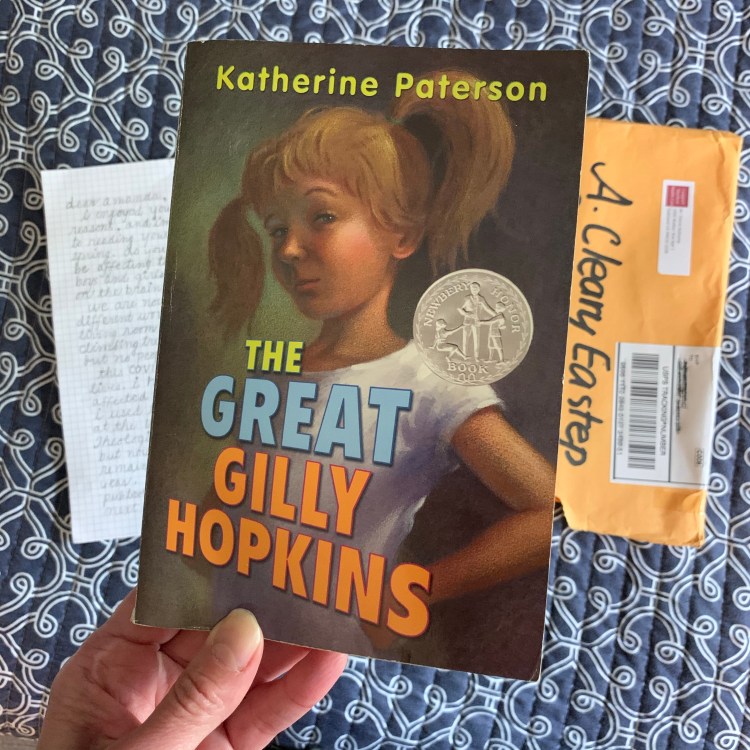
Weeks later, I received a reply, written in pencil on graph paper. . .the kind for neat lines and numbers. Mr. A told me that eventually our small classroom library grew to 200 books. He later donated them to the public school where he’d taught for 20 years before retiring.
Enclosed with his letter was a middle grade novel, Katherine Paterson’s The Great Gilly Hopkins. Exactly the kind of book that would have been on that narrow bookshelf. . .a book about a child trying to figure out the confusing and beautiful world.
A familiar story. A testament to the power of children’s fiction.
In pandemic isolation at the time, Mr. A said he was watching the squirrels out the window. The nearby university library he frequented was closed.
And he said he was looking forward to reading my books.
That is one of the most surprising plot twists I’ve ever read. It felt scary and humbling. It felt like magic. Like the best children’s stories.
 Amanda Cleary Eastep